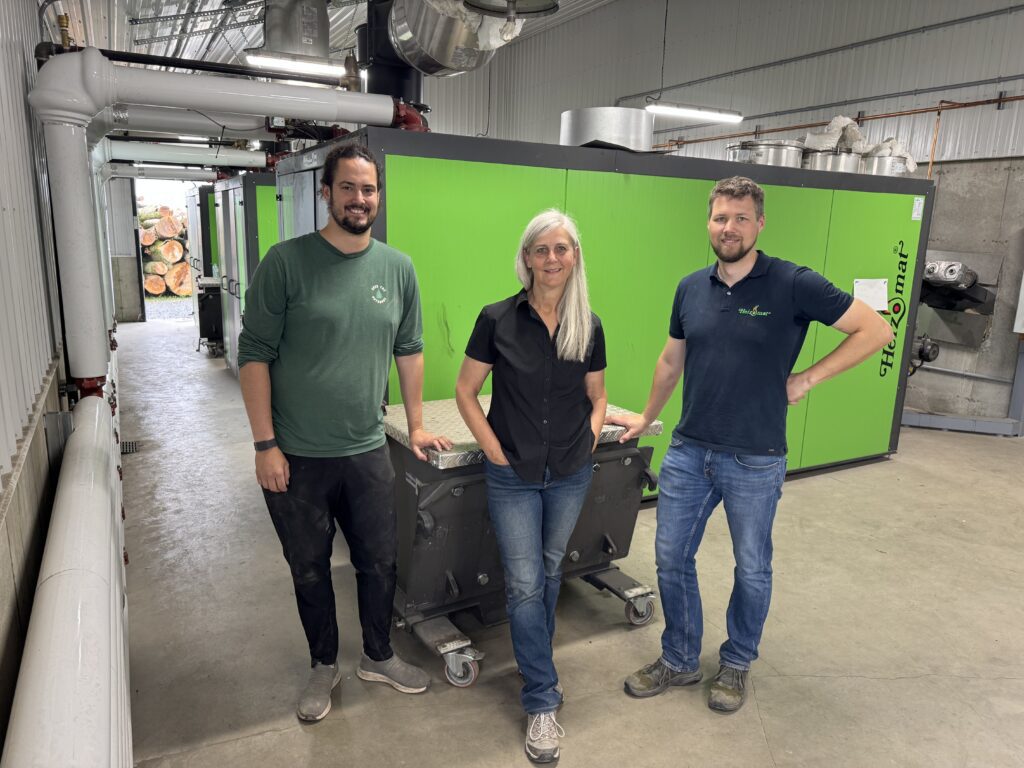

Biomass Boiler Installation in Canada: What You Need to Know about the Cost
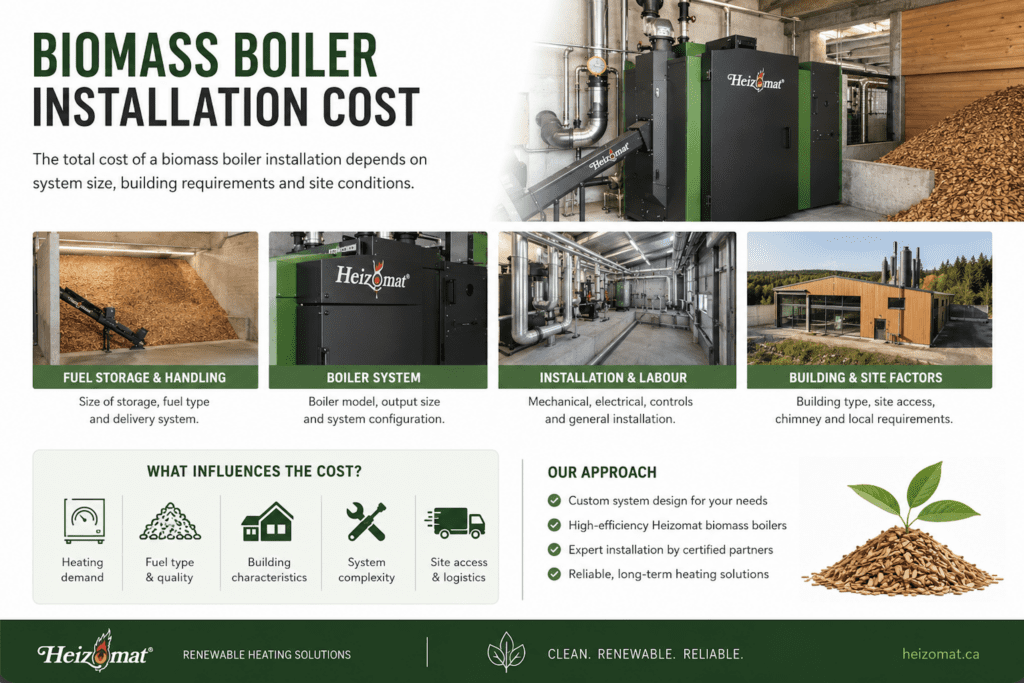
If you are researching biomass boiler installation cost in Canada, you have likely discovered that pricing can vary significantly. The total cost depends on factors such as boiler size, building requirements, existing heating infrastructure, and overall project scope.
In our experience, one of the biggest mistakes people make is focusing only on the price of the boiler itself. A successful biomass project is about designing an efficient heating system, not just buying a piece of equipment.
What Does a Biomass Boiler Installation Typically Cost?
For the types of commercial and agricultural biomass systems we work with, projects typically start making financial sense when heating at least 6,000 square feet.
As a general guideline:
- Entry-level systems producing 200,000 BTU and heating around 6,000 square feet start at approximately $68,000, including shipping and installation.
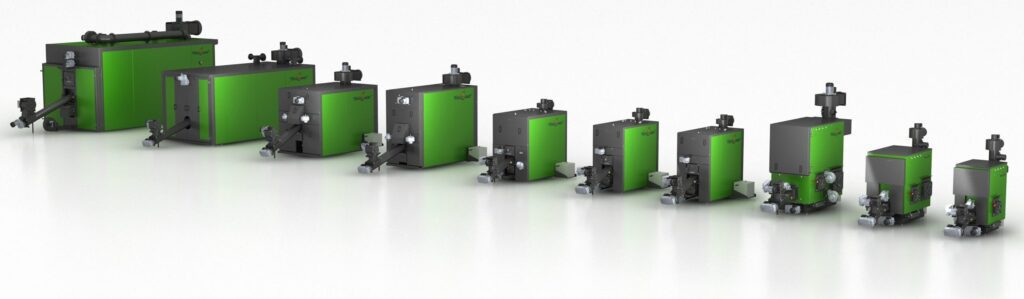
- Boiler sizes range from roughly 200,000 BTU up to 4.5 million BTU and beyond this they can be cascaded to provide heat for even larger buildings and heat loads.
- As boiler size increases, the cost per BTU decreases, making larger installations more cost-effective on a capacity basis.
Every project is unique, so these numbers should be viewed as starting points rather than fixed prices.
What Is Included in Biomass Boiler Installation Costs?
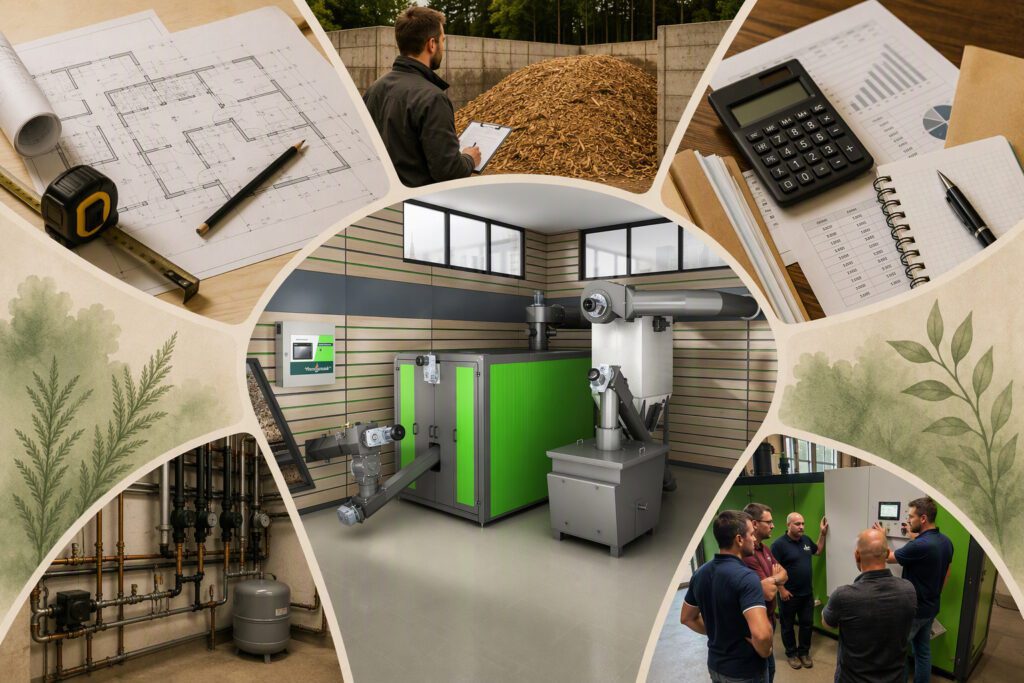
When budgeting for a biomass heating system, it’s important to consider the complete installation.
Additional costs may include:
- Chimney supply and installation
- Plumbing work and Buffer tank
- Electrical work
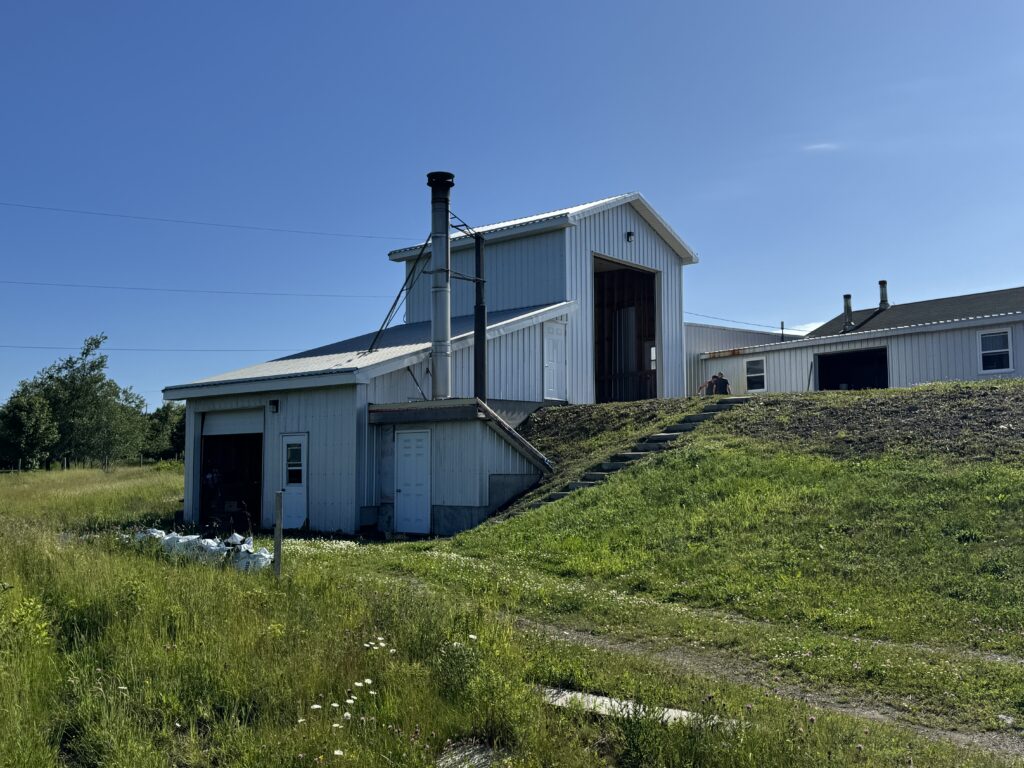
- Fuel bunker or storage facility
- Fuel handling equipment
- Underground piping if multiple buildings will be heated from a central boiler
These components are essential to building a reliable and efficient heating system and should be included in your planning from the beginning.
How Your Existing Heating System Impacts Cost
One of the biggest factors affecting project cost is the heating infrastructure already in place.
If your buildings already use a hydronic or forced-air heating system, integrating a biomass boiler can often be relatively straightforward.
However, buildings heated with direct-fired propane or natural gas heaters present a different challenge. Those systems are not directly compatible with a biomass boiler and may need to be replaced entirely, significantly increasing the overall project cost.
We’ve seen this single factor make the difference between a simple retrofit and a much larger capital project.
Biomass Delivers the Greatest Savings Against Propane and Heating Oil
From our perspective, biomass offers its strongest financial advantage when replacing propane or heating oil.
The fuel savings can be substantial enough that many customers recover their investment far sooner than they initially expect.
Unfortunately, many buyers only look at the upfront purchase price and stop there. For an in-depth article comparing Biomass versus Propane Click Here.
Don’t Ignore Financing When Evaluating the Economics
One misconception we encounter is that the high up front capital cost of biomass systems makes it difficult to make the switch from fossil fuels.
In reality, while biomass heating systems typically require a higher upfront investment than conventional heating equipment, financing can make the transition both practical and immediately beneficial.
By structuring the financing over an appropriate term, many customers find that their annual loan payments are lower than what they currently spend on propane, heating oil, or other fossil fuels. This means the project can generate positive cash flow from day one, reducing annual heating costs while the system is being paid off.
Once the financing period ends, the boiler is fully owned, and the savings increase even further.
With a typical lifespan of 30 years or more, a biomass boiler can provide decades of reliable, low-cost heating, delivering substantial long-term economic benefits well beyond the repayment period.
Biomass Isn’t Nearly as Hands-On as Many People Think
Another common misconception is that biomass systems require constant manual labour.
While there is more planning upfront to establish fuel sourcing, storage, and delivery logistics, modern automated biomass systems can operate with very little day-to-day intervention.
Once the fuel handling plan is properly designed, many owners find the system nearly as convenient as propane or oil while benefiting from much lower operating costs.
A Real-World Example
One project that stands out involved installing a 500 kW biomass boiler to heat approximately half an acre of greenhouses in Nova Scotia.
The total project cost was approximately $300,000.
The customer had previously relied on cordwood boilers that required loading multiple times every day and even through the night! They wanted a more automated and less labour intensive solution while also avoiding high heating expenses such as propane or oil.
The result was annual fuel cost savings of more than $92,000 compared to propane, along with dramatically improved convenience and labour savings.
For this customer, the project wasn’t just about reducing fuel bills—it also simplified day-to-day operations.
Ways to Reduce Overall Project Costs
There are several ways to improve the economics of a biomass installation.
First, investigate available incentives such as Clean Technology Investment Tax Credits, which can reduce eligible project costs by as much as 30% in some situations.
Second, pay close attention to system design. Poorly designed and overpriced plumbing work, unnecessary electrical complexity, or poorly planned fuel handling systems can all inflate project costs without adding value.
Choosing the right feed system and designing simple, efficient fuel storage from the outset can make a significant difference.
Our Best Advice Before Requesting Quotes
If we could offer only one recommendation, it would be this: get expert advice before committing to a design.
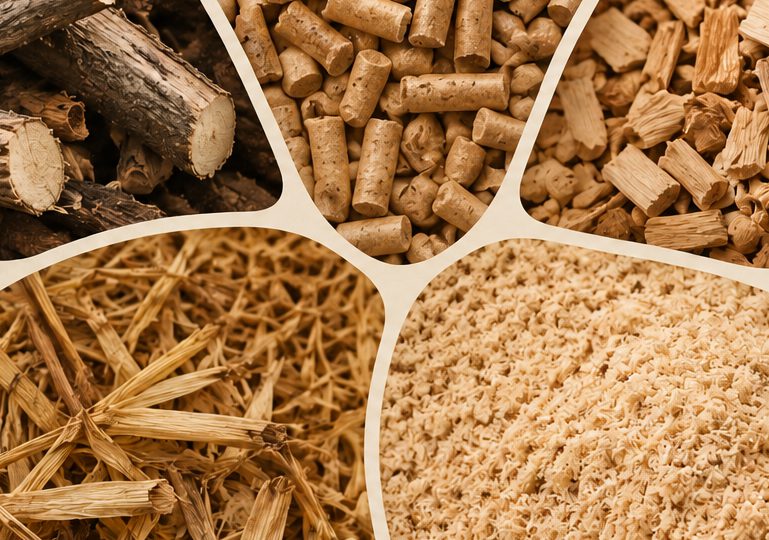
The best biomass projects start with someone taking the time to fully understand your buildings, your current heating system, your fuel options, and your long-term goals.
Proper boiler sizing, an efficient layout, well-designed plumbing, and a practical fuel handling plan can save far more money over the life of the system than simply choosing the lowest equipment quote.
Final Thoughts
Biomass boiler installation costs vary widely, but for facilities heating at least 6,000 square feet—especially those currently relying on propane or heating oil—the investment can deliver significant long-term savings and many other business benefits.
The beauty of wood chip and biomass heating is the guarantee that the price of your fuel will not be volatile like other fuels traded as a commodity.
The key is evaluating the entire project rather than focusing solely on the boiler price. With thoughtful design, appropriate sizing, and expert guidance, a biomass heating system can provide lower operating costs, greater automation, and an attractive return on investment for years to come.