
If you’re considering replacing a propane boiler with a biomass boiler, you’re probably asking one question:
“Will it actually be worth it?”

It’s a fair question.
Propane boilers have a low upfront cost and they’re familiar and relatively easy to install.
Biomass boilers, on the other hand, represent a larger investment and require more planning before installation.
After helping customers design biomass heating systems for years, we’ve found that comparing the two based on purchase price alone often leads people to the wrong conclusion.
The better question may be:
Which heating system is the better long-term fit – for your building, your business, and your goals?
In this article, we’ll compare biomass and propane honestly—including the situations where propane is still the better choice.
Biomass vs. Propane at a Glance
| Factor | Biomass Boiler | Propane Boiler |
|---|---|---|
| Initial Cost | Higher | Lower |
| Fuel Cost | Typically Much Lower | Subject to Market Prices |
| ROI | Often 5-7 years. Sometimes less with incentives | Low upfront investment but ongoing fuel costs |
| Lifespan | 30+ years | Typically shorter |
| Automation | Fully automatic fuel feeding, combustion and cleaning. | Fully Automatic |
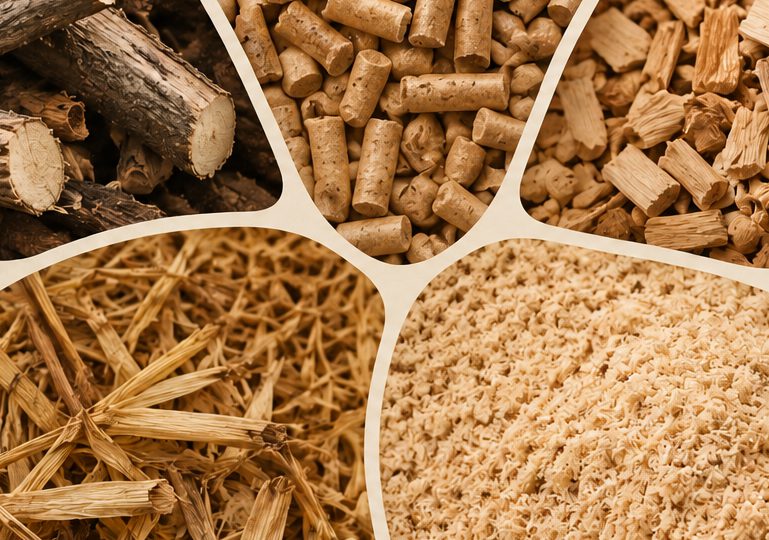
| Fuel Source | Wood chips, pellets or other biomass | Delivered Propane |
| Fuel Price Stability | High especially with local fuel sources | Subject to Market Volatility |
| Environmental Impact | Renewable Fuel | Fossil Fuel |
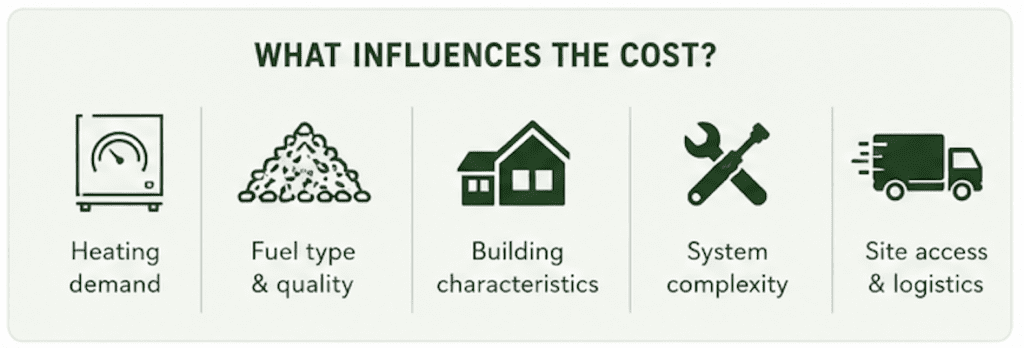
The biggest mistake we see is people focusing entirely on the purchase price instead of the total cost of ownership over the next 20–30 years.
Coming in close second… we find there are a number of misconceptions about biomass that prevent decision makers from making a fully-informed choice. Here are a few of the most common misunderstandings.
Misconception 1: Biomass Boilers Require Constant Work
This is probably the biggest misconception we hear.
There is no question that a biomass project requires more planning than installing a propane boiler.
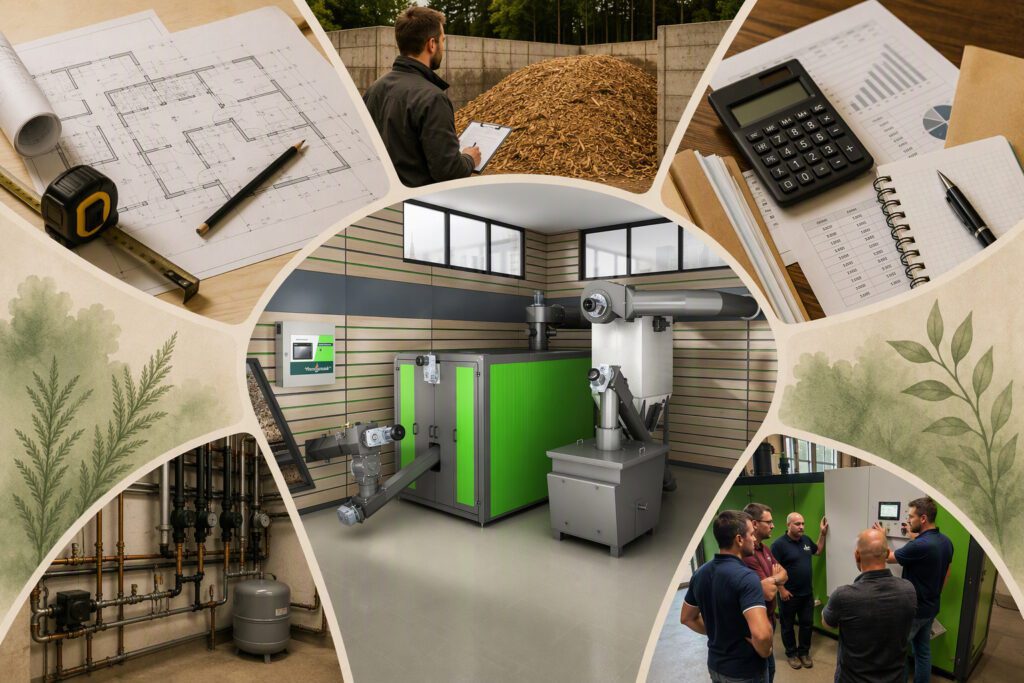
Before installation you need to think about:
- Where your fuel will come from.
- How you’ll receive and store it.
- How you’ll load your fuel bunker.
- How the boiler room will fit into your existing building or new construction.
That planning is real—and it’s important.
What surprises many new owners is what happens after the system is commissioned.
Modern biomass boilers are almost completely automated.
Once wood chips are delivered into the fuel bunker, the boiler automatically:
- Feeds itself.
- Adjusts combustion to match the building’s heating demand.
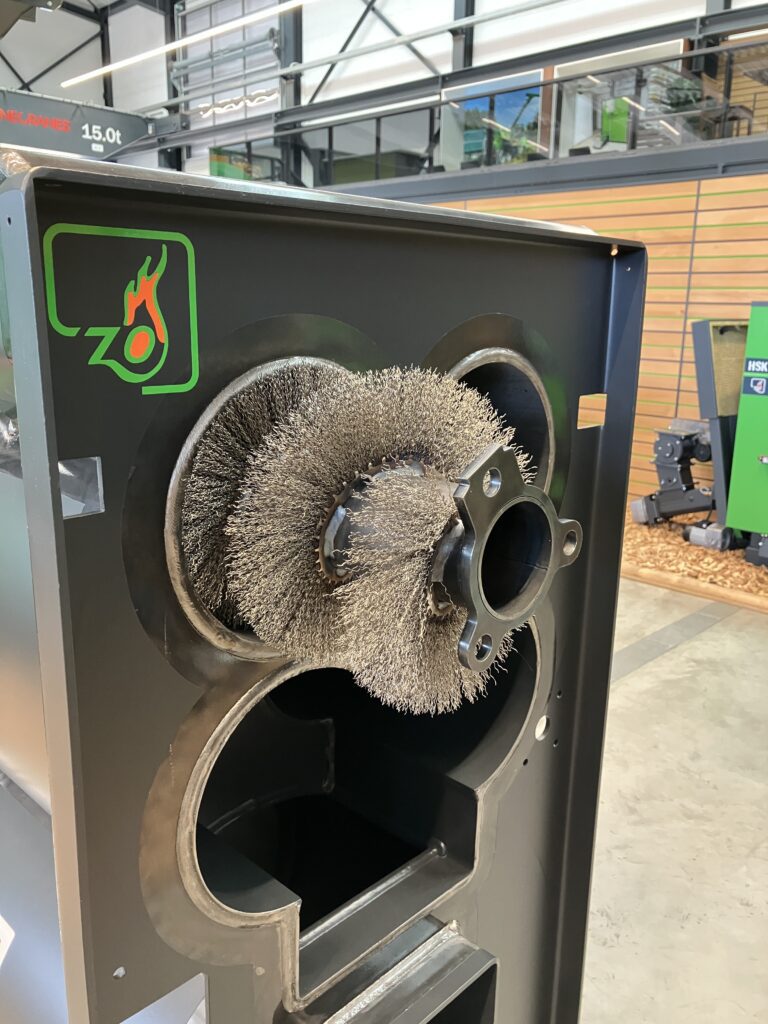
- Cleans its own combustion chamber and heat exchanger.
- Removes ash into an ash container.
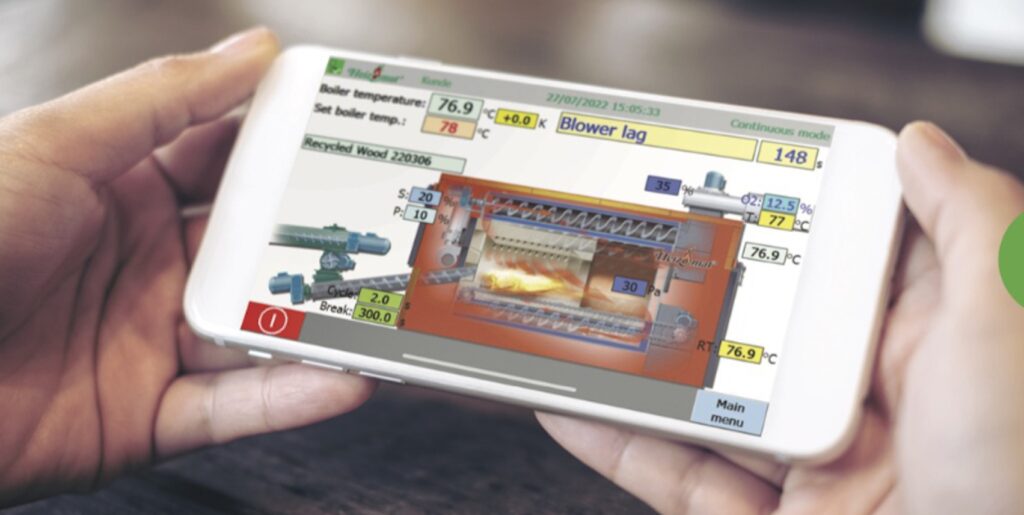
- Can be monitored remotely from a smartphone.
Depending on the size of the fuel bunker, customers may only refill fuel weekly, monthly or, in some cases, just once per year.
Maintenance is often simpler than people expect as well.
Routine tasks such as cleaning the chimney, greasing moving components and checking sensors or blowers can often be completed by trained on-site staff. Unlike propane systems, servicing doesn’t always require a professional unless a plumbing or electrical repair is needed.
The work isn’t in operating the boiler.
The work is in planning the project properly.
Misconception 2: Propane Is Cheaper Because It Costs Less to Install
This comparison ignores where most of your money will actually be spent.
Propane boilers are relatively inexpensive because they’re burning a highly refined fuel. The boiler doesn’t need complicated fuel handling systems.
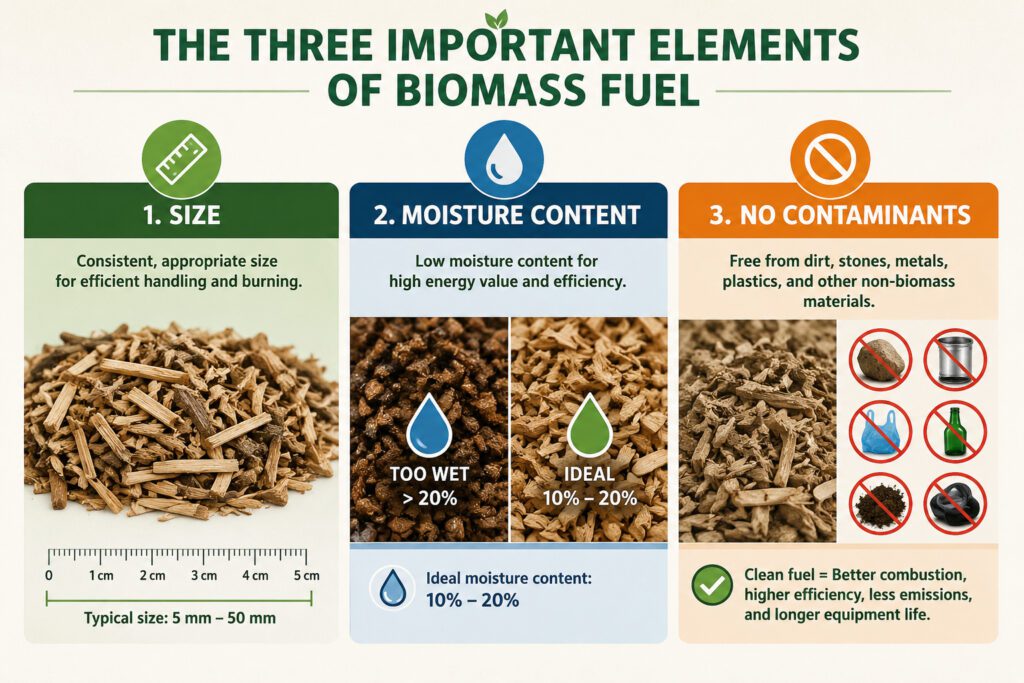
Biomass boilers are designed to process a natural fuel that varies in moisture content, particle size and density. They require sophisticated fuel handling, combustion controls and cleaning systems, which increases the initial investment.
That’s why many people stop comparing after looking at the quote.
In our experience, that’s a mistake.
Many biomass projects achieve a return on investment in five to seven years, and projects supported by federal or provincial incentives may pay back even sooner.
After that, owners continue benefiting from dramatically lower heating costs for decades.
We often describe the difference like this:
Propane is a subscription model – Biomass is an infrastructure investment.
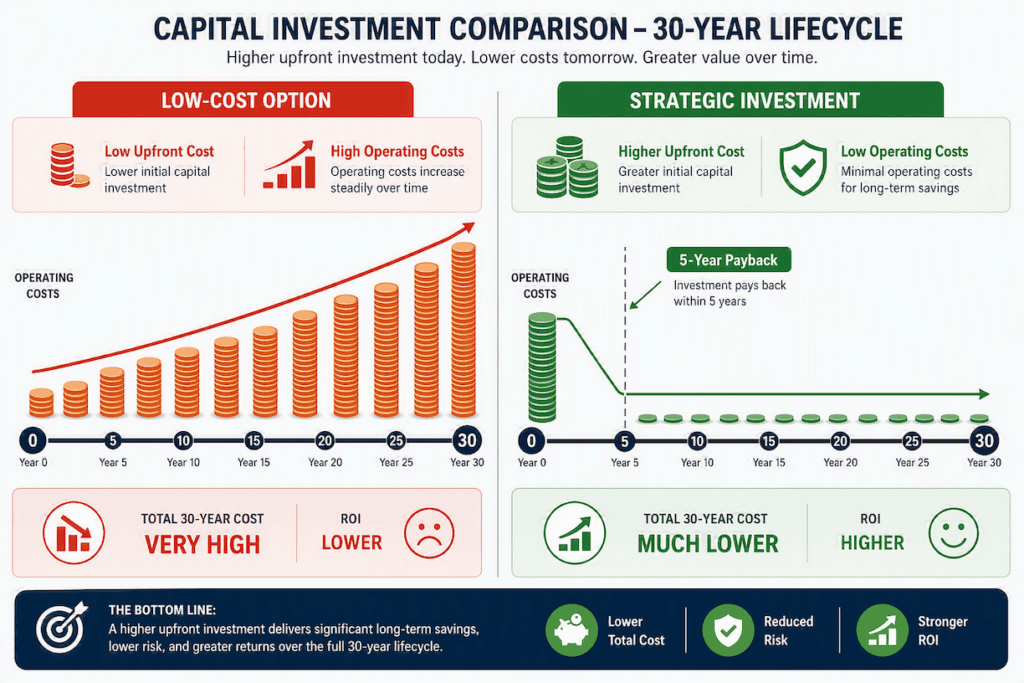
With propane, you continue paying unpredictable fuel bills year after year.
With biomass, you’re investing in equipment that can continue generating savings for more than 30 years.
Some customers pay for the project upfront and eliminate much of their future heating expense.
Others finance the installation and discover that their loan payment is lower than their previous propane bill.
Either approach can dramatically improve long-term operating costs.
Misconception 3: It’s Only About the Boiler
A propane replacement is often straightforward.
A biomass installation deserves more thought because good planning directly affects the ownership experience.
Some of the most important questions when considering biomass include:
Where will your fuel come from?
- Will you purchase wood chips?
- Produce your own from waste wood?
- Partner with a local supplier?
Your fuel supply needs to be reliable and capable of meeting your annual demand.
How will you receive and store fuel?
Some customers have walking-floor trucks unload directly into a bunker.
Others chip their own material into storage.
The right design depends on your equipment, available space and preferred workflow.
Where should the boiler room be located?
Proper layout can reduce plumbing costs, improve maintenance access and create a more efficient heating system.
Taking the time to answer these questions before construction often results in lower capital costs, easier maintenance and a better long-term ownership experience.
When Propane Is Still the Better Choice
One thing we always tell prospective customers is this:
Biomass isn’t the right solution for everyone.
In general, projects with heating loads below approximately 200,000 BTU/hr (often buildings under about 6,000 square feet) can have much longer payback periods.
Government incentives such as the Federal Clean Energy Tax Credits which offer a tax rebate of up to 30%, can sometimes change that calculation, but smaller applications should be evaluated carefully.
If propane isn’t significantly affecting your operating costs, the planning and investment required for biomass may not be worthwhile.
The best biomass projects usually have one or more strong motivations:
- High annual heating costs.
- A desire to reduce exposure to volatile fuel prices.
- Access to low-cost or waste wood.
- Long-term ownership plans.
- Sustainability or net-zero objectives.
Without one of those drivers, propane may remain the better option.
Real Customer Examples
Poultry Operation
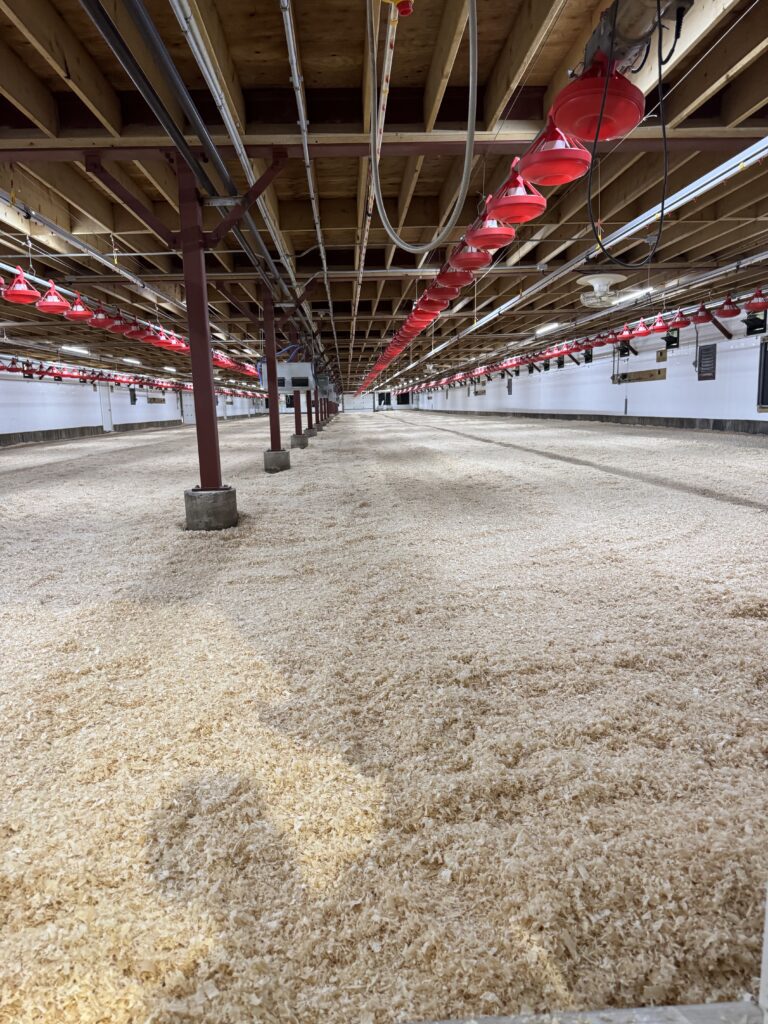
A poultry producer switched from propane primarily to improve profitability.
Along the way, they discovered that the drier heat produced by biomass significantly reduced moisture in the barns, improving bird health while lowering ventilation requirements.
Today they heat multiple buildings, produce their own wood chips from waste logs and have operated reliably for more than five years without worrying about heating bills.
Farm With Multiple Buildings
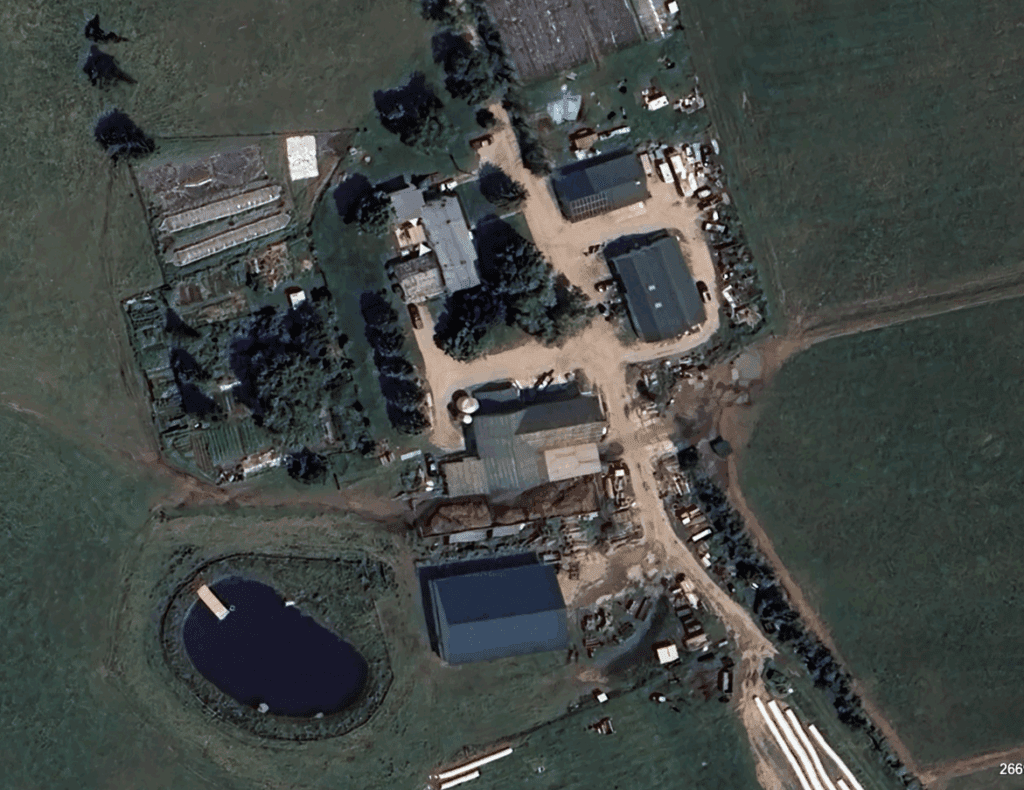
A farm owner planning a new build wanted to avoid decades of propane costs.
By designing biomass into the project from the beginning, producing fuel from waste wood and integrating heating for the home and workshops, the project achieved a payback of just over five years.
The owner now expects decades of predictable heating costs.
Commercial Greenhouse
Unable to justify heating with propane, one greenhouse relied on labour-intensive cordwood boilers.
Automated biomass eliminated overnight loading, reduced labour costs by over $30,000 annually, improved plant growth by approximately 10% and achieved an exceptional three-year payback after incentives.

The Biggest Advantages of Biomass That People Rarely Talk About
Most people focus on lower heating costs.
Our customers often tell us the biggest benefits are the ones they didn’t fully appreciate until after installation.
Energy Independence
Many businesses tell us the greatest benefit is knowing what their heating costs will look like years into the future.
Instead of worrying about propane price spikes, they gain confidence from having access to a predictable, locally available fuel supply.
That creates resilience—not just savings.
Turning Waste Into Value
Many manufacturers, farms and wood processors already generate waste wood.
Instead of paying to dispose of it, they process it into boiler fuel.
Some customers even accept waste wood from nearby businesses, receiving payment for the service while lowering their own heating expenses.
Better Heat Quality
Propane combustion for poultry operators introduces moisture into the barn, increasing ventilation requirements and increasing fuel and electricity costs.
Biomass produces a drier heat improving bird health and lowering both heating and electrical costs.
Business Growth
Lowering heating costs from by switching to biomass from propane can allow for all year usage of key buildings and greenhouses which would otherwise only be utilized from spring to fall. This can enable businesses to continue their operations right through winter creating opportunities like greater revenue and bringing operations in house that might otherwise need to be outsourced. Think of a farm being able to heat all its barns and workshops in the winter, making use of heated buildings for storage or equipment repair.
That’s much more significant than simply saving money on fuel.
Our Advice
When someone asks us whether they should choose biomass or propane, we don’t start by talking about boilers.
We start by asking three questions:
- How many square feet are you heating?
- What is your heating load?
- Why do you want to make a change?
Those answers usually tell us whether biomass makes sense.
If the numbers work, we then evaluate the fuel supply, project layout and long-term goals before recommending a system.
The biggest mistake we see is comparing biomass and propane based solely on the initial purchase price.
The better comparison looks at the entire ownership experience over the next 20 to 30 years.
For the right application, a biomass boiler is much more than a way to reduce heating costs.
It becomes a long-term business asset that provides predictable operating costs, greater energy independence and decades of reliable service.
If you’re considering making the switch, spend time understanding the complete picture. Talk with an experienced biomass heating specialist, evaluate your site’s fuel options and compare the total lifetime cost—not just the installation price.
That’s how you’ll know whether biomass is truly the right investment for your project.